
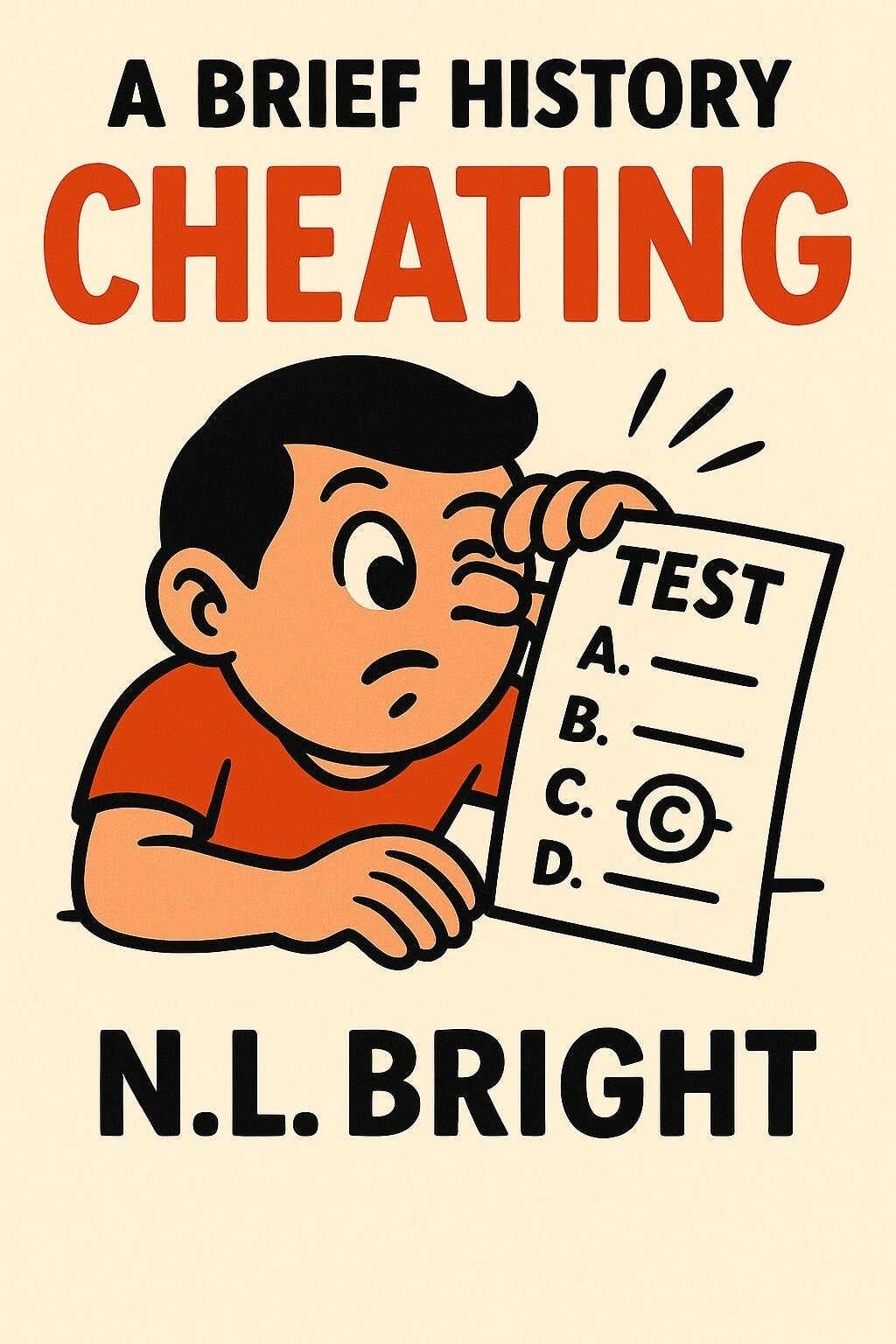
A Brief History
of Cheating
Every rule eventually meets an opportunity.
A Brief History of Cheating looks at the ingenious ways people create rules, praise rules, enforce rules, and then begin searching for the exception that applies specifically to them.
Cheating can be intimate or institutional, obvious or elegant. It appears in relationships, classrooms, workplaces, competitions, politics, business, money, status, and nearly every system that has ever depended on human beings agreeing to play fairly.
Sometimes the cheat is crude. Sometimes it arrives wrapped in procedure, influence, privilege, technicalities, selective enforcement, or a carefully worded explanation for why the rule was never intended to apply under these particular circumstances.
The real comedy begins when a society insists that everyone is playing the same game while quietly maintaining several different scoreboards.
Through satire and social observation, the novel explores fairness, hypocrisy, competition, loyalty, institutions, privilege, ambition, self-justification, and the remarkable flexibility of moral standards when winning becomes possible.
A Brief History of Cheating is a comic examination of rules, loopholes, advantage, temptation, and humanity's enduring ability to consider an act completely unacceptable right up until committing it becomes useful.