
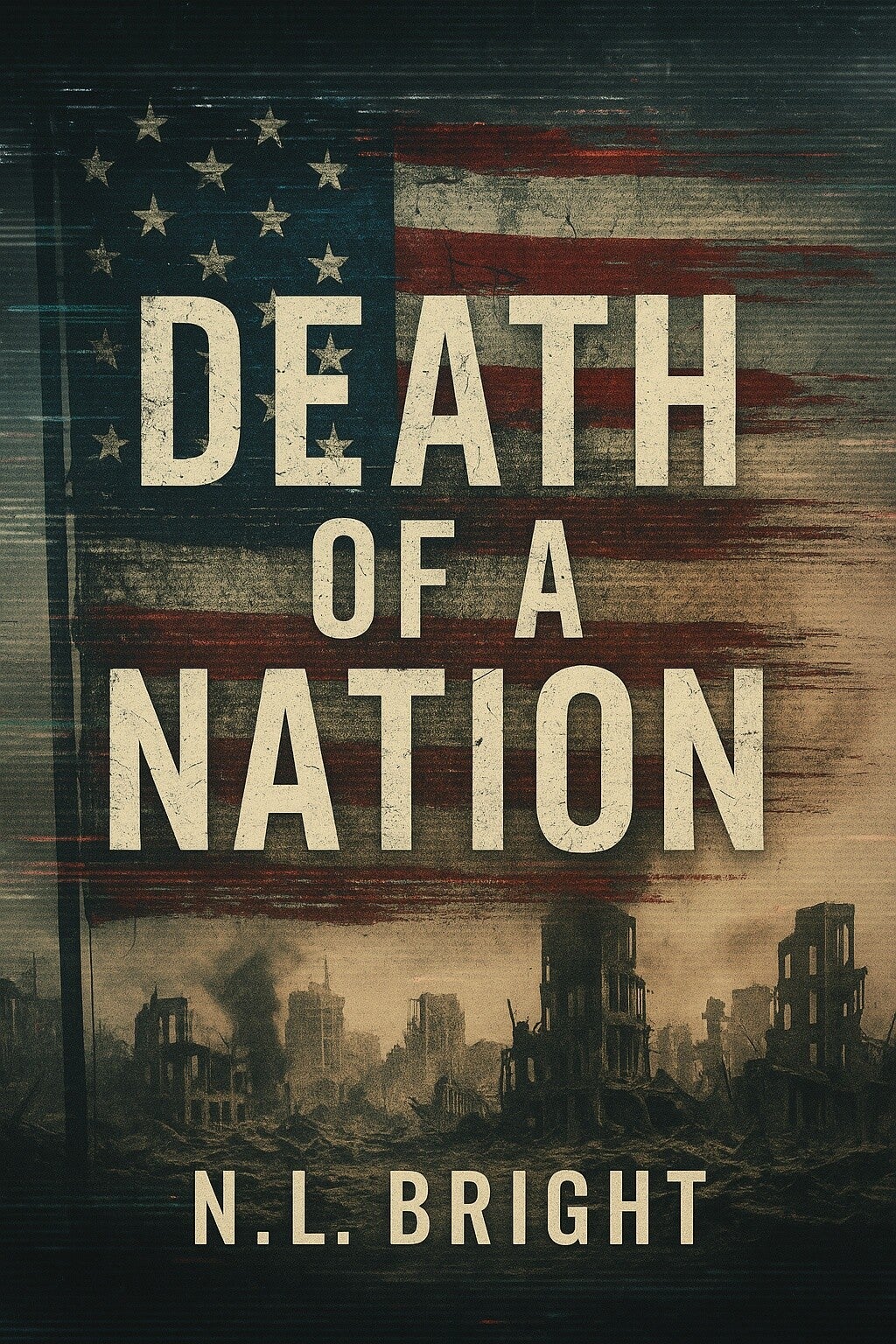
Death Of A Nation
A country can survive crisis and still lose the thing it believed itself to be.
Death Of A Nation examines political power, institutional decay, civic identity, public memory, and the uneasy distance between the principles a country celebrates and the choices it makes when those principles become inconvenient.
Democracies depend on more than elections. Governments depend on more than laws. Nations depend on assumptions shared by people who may disagree about nearly everything else.
When those assumptions begin to fracture, institutions that once appeared permanent can become instruments in conflicts they were never designed to survive.
Political movements promise restoration. Leaders promise security. Citizens divide themselves into camps increasingly certain that the greatest threat to the country is the existence of the other side. Each decision appears defensible on its own.
As political identity hardens and compromise becomes indistinguishable from surrender, the struggle over government becomes a struggle over the meaning of citizenship itself.
Death Of A Nation is political fiction about power, institutional legitimacy, civic fracture, ideology, responsibility, and the consequences of treating democratic norms as permanent simply because they have survived so far.