
A Brief History
of Lying
The truth has always had competition.
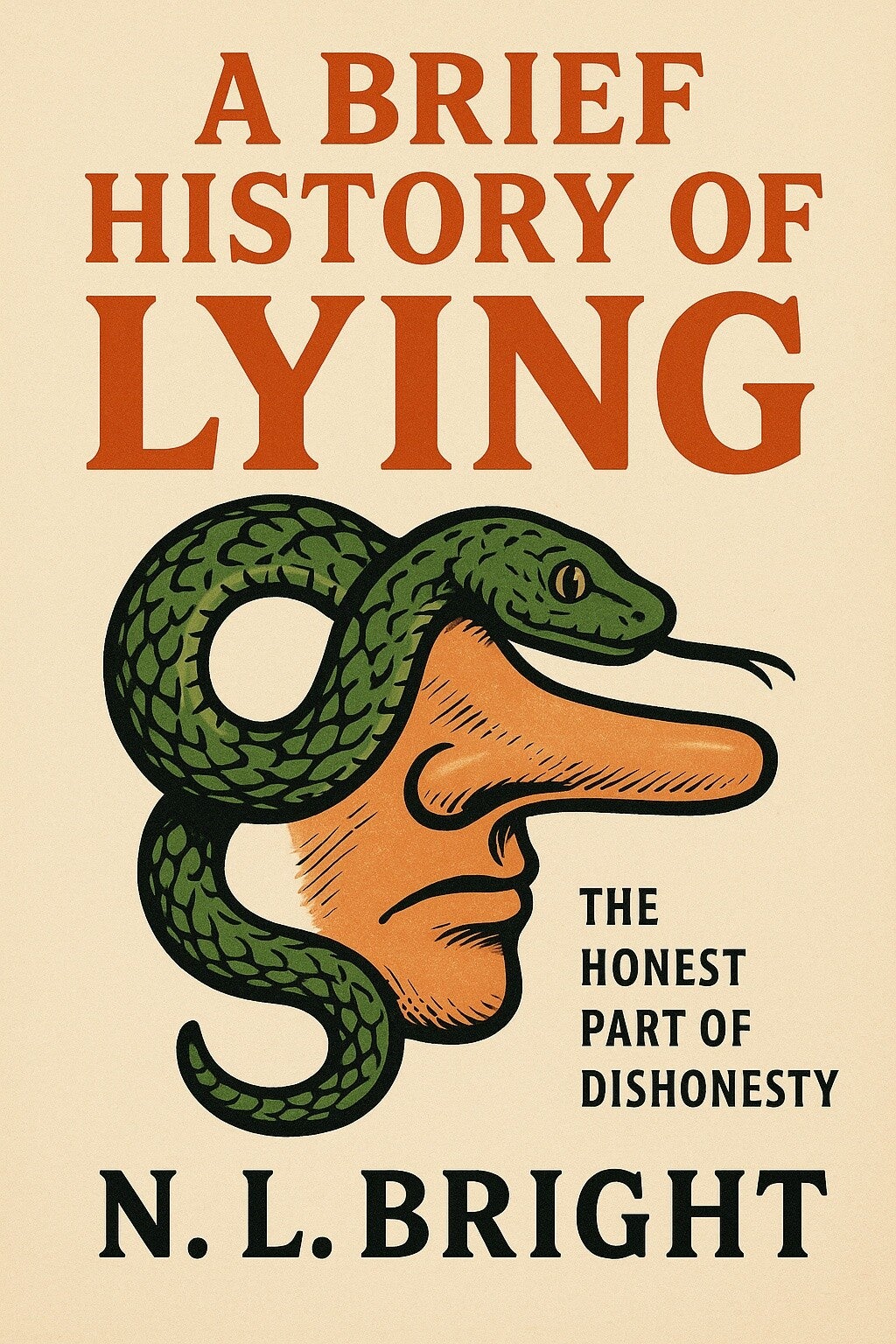
A Brief History of Lying takes aim at one of humanity's oldest, most flexible, and most consistently useful inventions: the lie.
People lie to protect themselves, improve themselves, excuse themselves, sell things, win arguments, preserve relationships, end relationships, gain power, avoid consequences, create legends, repair reputations, and occasionally make an ordinary Tuesday considerably easier.
Institutions become even more ambitious. Governments discover official versions. Businesses develop messaging. Families acquire selective memory. History learns that the difference between a fact and a story can depend heavily on who survives long enough to write the caption.
The strange part is not that human beings lie. The strange part is how often entire systems depend upon everyone agreeing not to call certain lies by their proper name.
Through satire and social observation, the novel considers the uneasy relationship between truth, convenience, reputation, authority, memory, persuasion, self-interest, and the stories people construct in order to keep living comfortably with themselves.
A Brief History of Lying is satirical fiction about dishonesty, belief, institutions, culture, power, self-deception, and the remarkable creativity people display whenever the truth becomes inconvenient.