

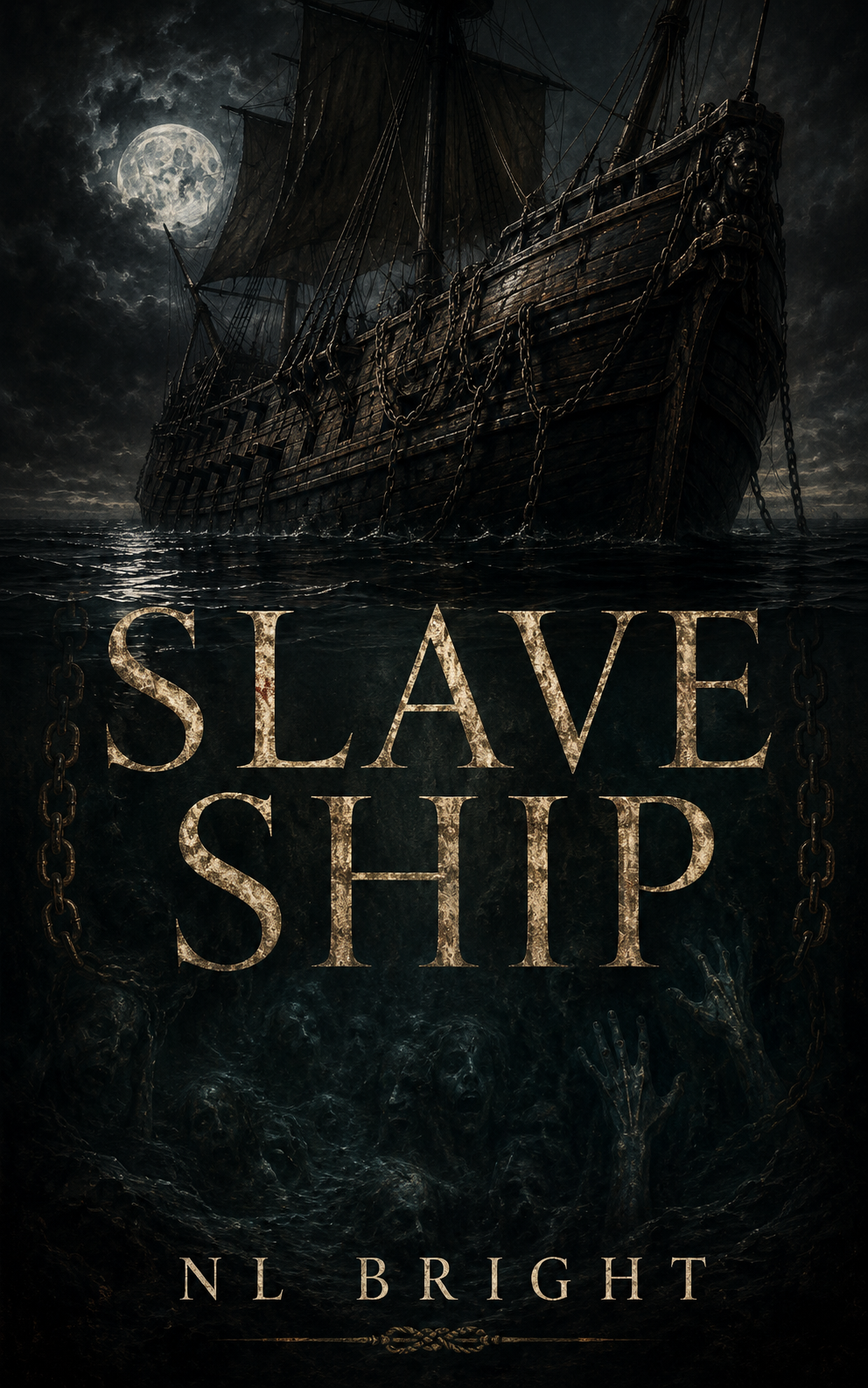
Slave Ship
An ocean crossing measured not only in miles, but in everything people were forced to leave behind.
Slave Ship opens the Bondage Trilogy by confronting one of the central mechanisms through which the transatlantic slave trade turned captured human beings into commodities within a vast commercial system.
The ship was more than transportation. It was an engineered space of confinement, coercion, separation, commerce, fear, resistance, and survival—a place where people from different families, communities, languages, and histories were forced into a shared catastrophe.
Behind the ledgers, routes, prices, cargo calculations, and economic language were individual people experiencing the destruction of familiarity while trying to preserve whatever remained of identity, dignity, relationship, memory, and hope.
Those operating the system could reduce the voyage to logistics. Those trapped within it could not. Every mile created greater distance from one world while carrying them toward another world whose rules had already been written without their consent.
Rather than treating history only as dates, institutions, and outcomes, Slave Ship focuses attention on the human cost inside the machinery of the past and the systems that depended upon making individual lives disappear behind categories.
It begins a larger historical journey through bondage, power, survival, race, family, inheritance, and the structures that would continue evolving after the ships reached shore.
The Bondage Trilogy
Continue the historical journey through bondage, power, survival, inheritance, race, and the changing structures that shaped American life across generations.