
The Miserable Lives
of Rich Men
Wealth solves many problems. Human nature keeps inventing new ones.
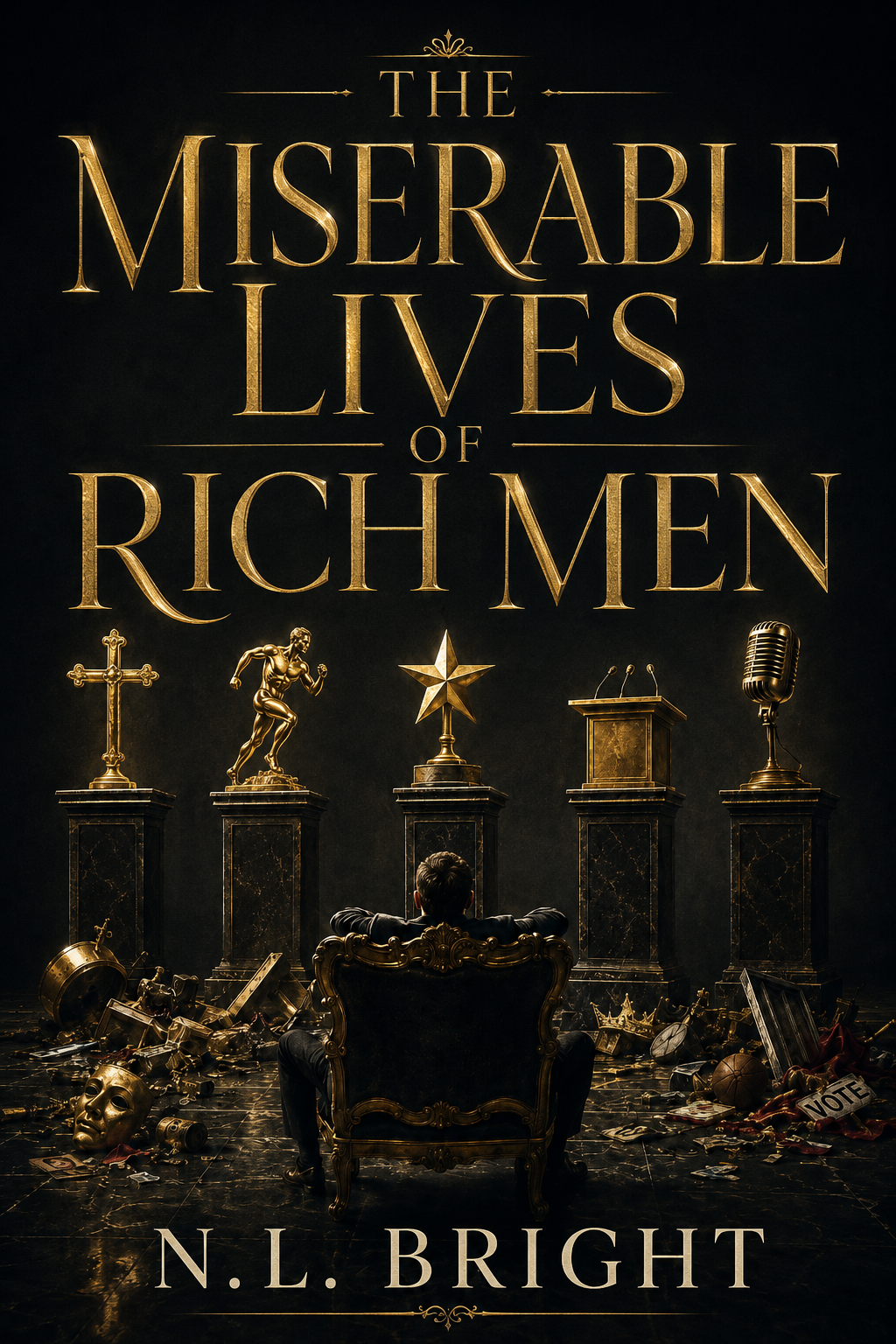
The Miserable Lives of Rich Men turns wealth, status, privilege, ambition, insecurity, and the mythology of success into the machinery of social satire.
Money changes what is possible. It changes where people live, who returns their calls, what mistakes they can survive, and how easily inconvenience can be transferred to somebody else.
But money does not remove jealousy, loneliness, pride, fear, resentment, vanity, competition, regret, or the need to believe that somebody else is doing worse.
The richer the men become, the more sophisticated their problems appear—and the more absurd it becomes that lives surrounded by abundance can remain organized around dissatisfaction.
Through social observation, irony, and character-driven satire, the novel examines what happens when material success becomes a substitute for emotional certainty, identity, belonging, or meaning.
The Miserable Lives of Rich Men is fiction about money, power, privilege, status, ambition, insecurity, and the peculiar misery of discovering that success can deliver exactly what was requested without delivering what was actually wanted.