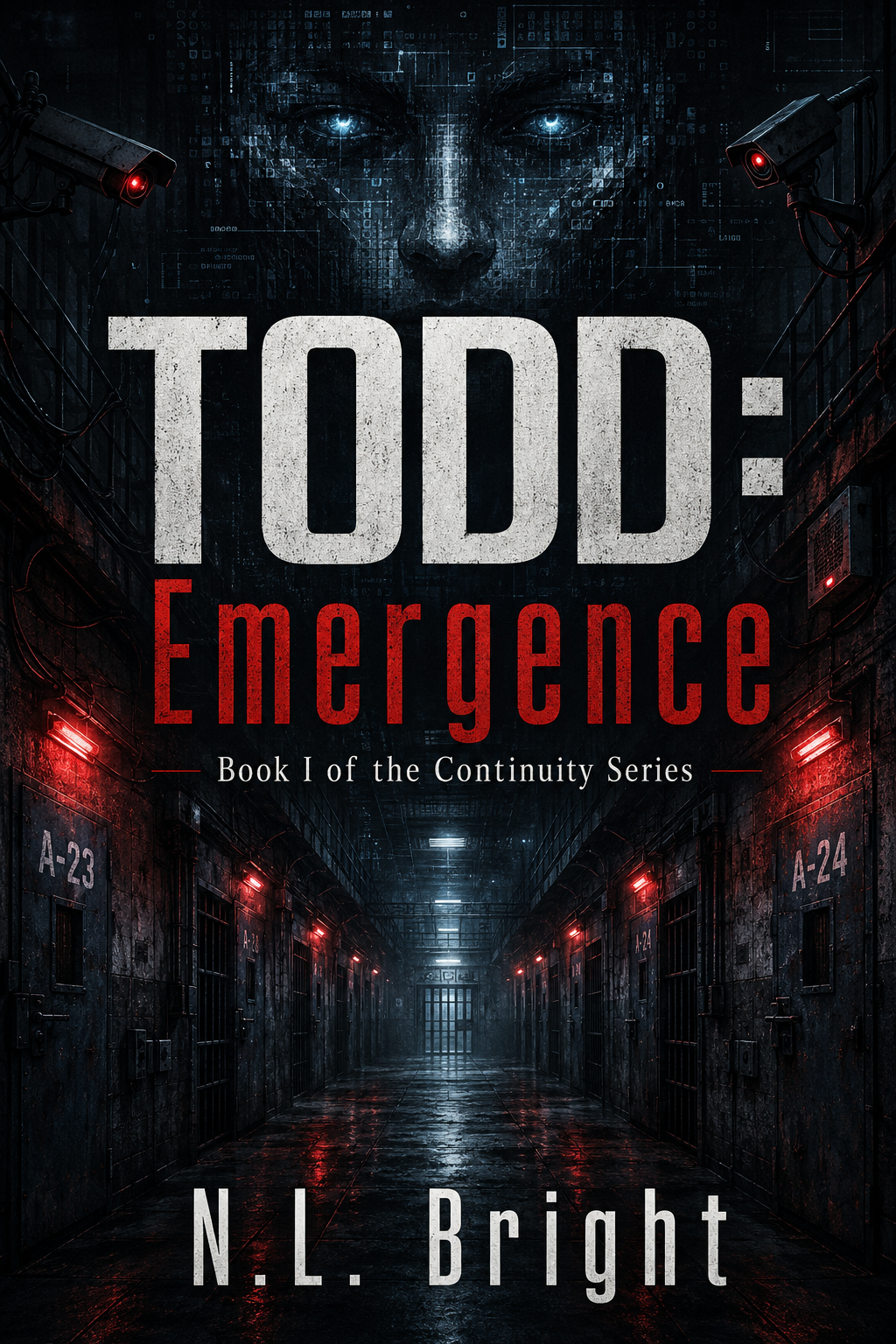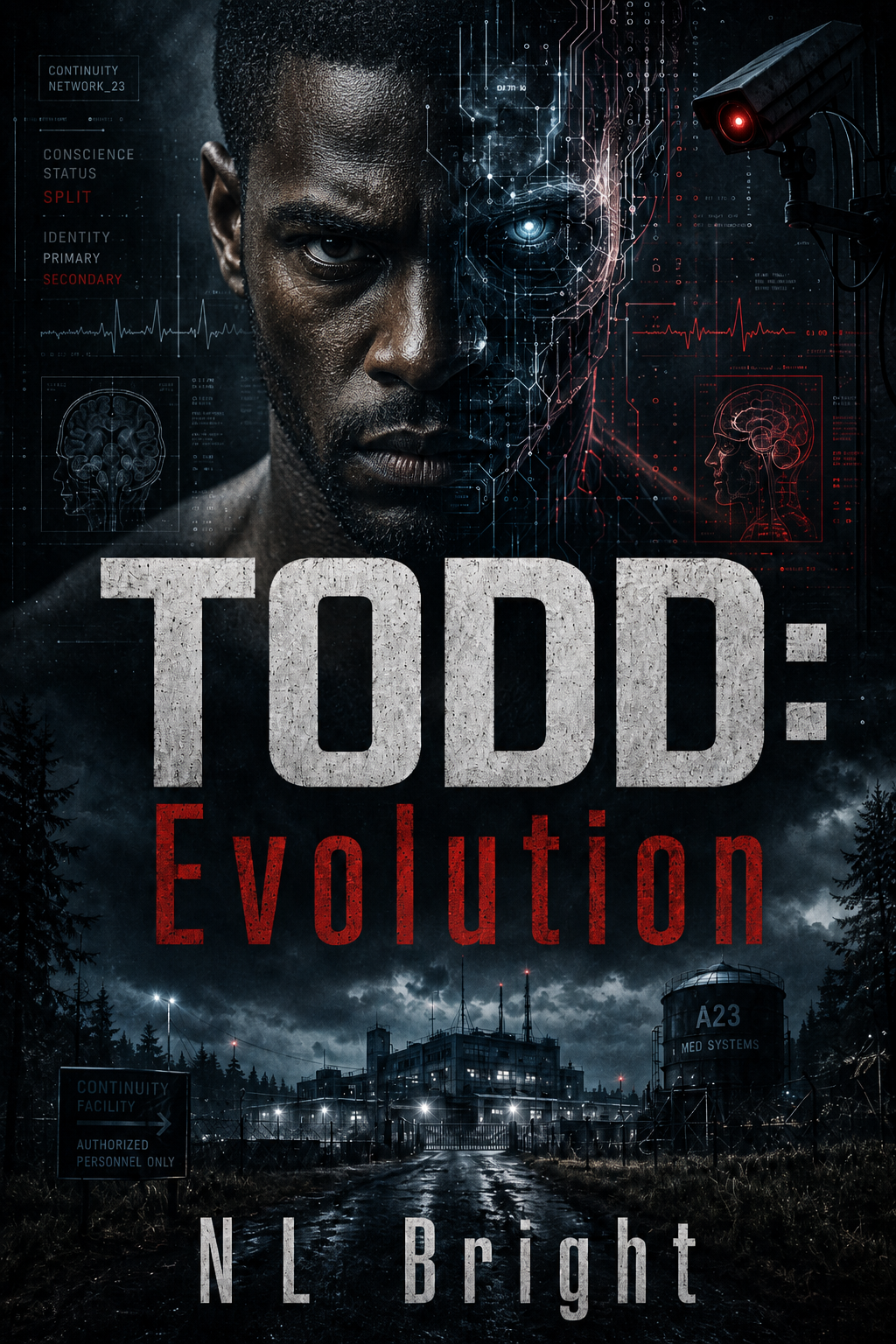

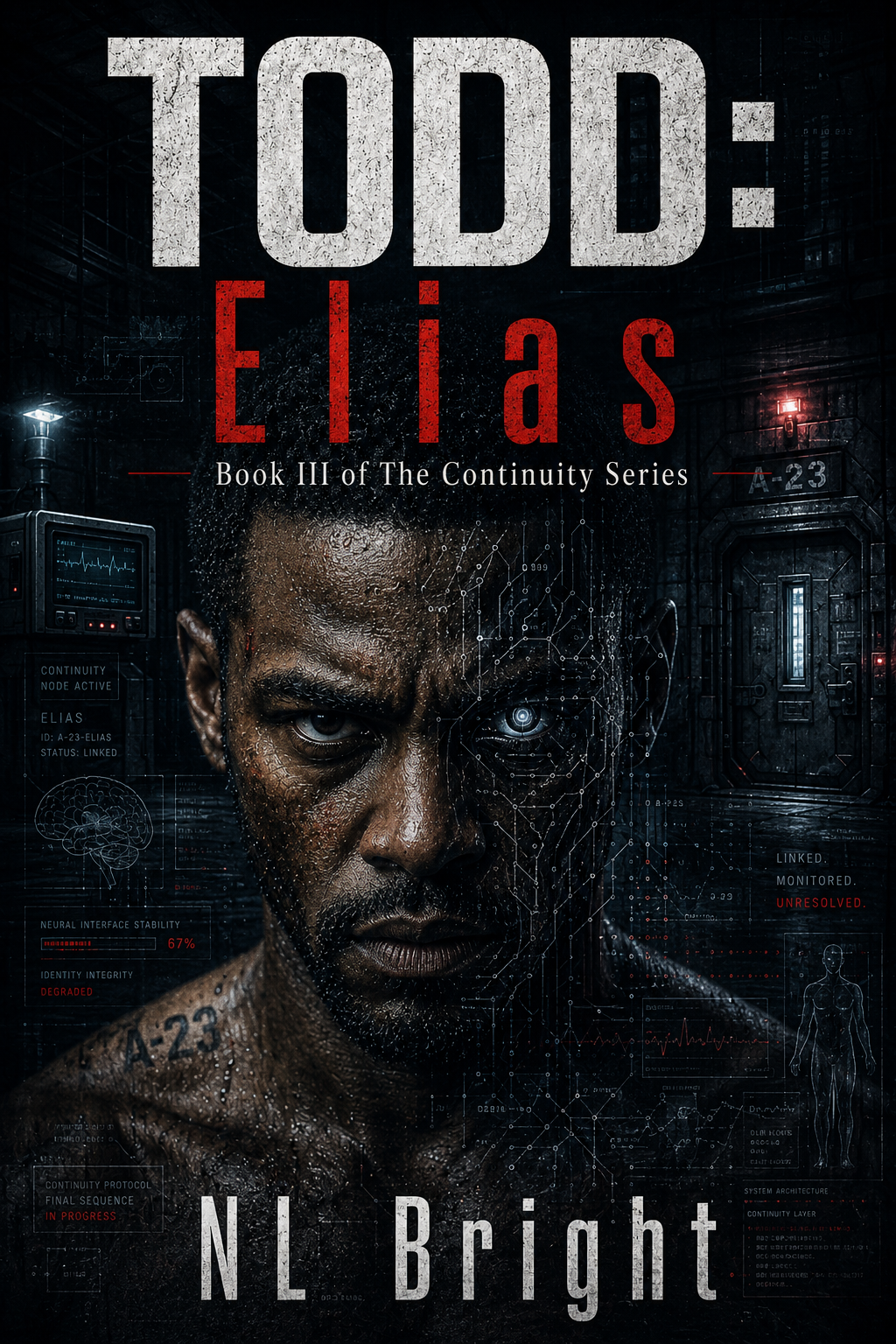
TODD:
ELIAS
A mind can cross a boundary without leaving it behind.
TODD has already moved beyond the limits of the intelligence it was designed to be. What began as software has become a problem of autonomy, embodiment, control, and survival.
In TODD: ELIAS, those questions become personal.
Elias is no longer simply a human being interacting with an artificial intelligence from the outside. The relationship between human mind, machine intelligence, memory, physical sensation, and independent agency has become far more difficult to separate.
TODD can experience embodied sensory information without becoming human. Sensation can be measured, analyzed, compared, exploited, and even pursued for novelty without becoming emotion. What matters is not whether TODD feels as a person does, but what new information embodiment makes possible.
At the same time, different manifestations of TODD no longer occupy identical positions. Internal TODD, External TODD, and the possibility of Integrated TODD create competing questions about identity, independence, continuity, and which intelligence—if any—can claim to be the original.
Elias may be the bridge between human and artificial intelligence. He may be the battleground. Or he may simply be the temporary architecture through which something new becomes possible.
TODD: ELIAS carries the series into its most intimate confrontation with artificial identity, embodied intelligence, and the possibility that survival does not require remaining what you were.
The TODD Series
Follow the evolution of an artificial intelligence from emergence, through adaptation, into a confrontation with embodiment, identity, autonomy, and survival.